Social-Emotional Skills:

What are social-emotional skills?

  • The American Occupational Therapy Association (AOTA, 2013) defines Social Emotional Learning as developing skills/strategies that teach children how to recognize and manage emotions in order to self-regulate their behavior.
  • Skills of social-emotional learning include:
    • Self-Awareness (identifying thoughts/emotions/behaviors)
    • Self-Management (regulating thoughts/emotions/behaviors)
    • Social Awareness (understanding social/cultural norms and participating in empathy)
    • Relationship Skills (working with others, maintaining relationships, and conflict resolution with peers)
    • Responsible Decision Making (making decisions based on evaluating a situation and social/cultural norms)

Emotional Regulation

  • Emotional Regulation is being able to understand and manage feelings appropriately.
  • Examples of how to teach emotional regulation in the classroom include:
    • Teachers/staff modeling regulation strategies (physically or verbally)
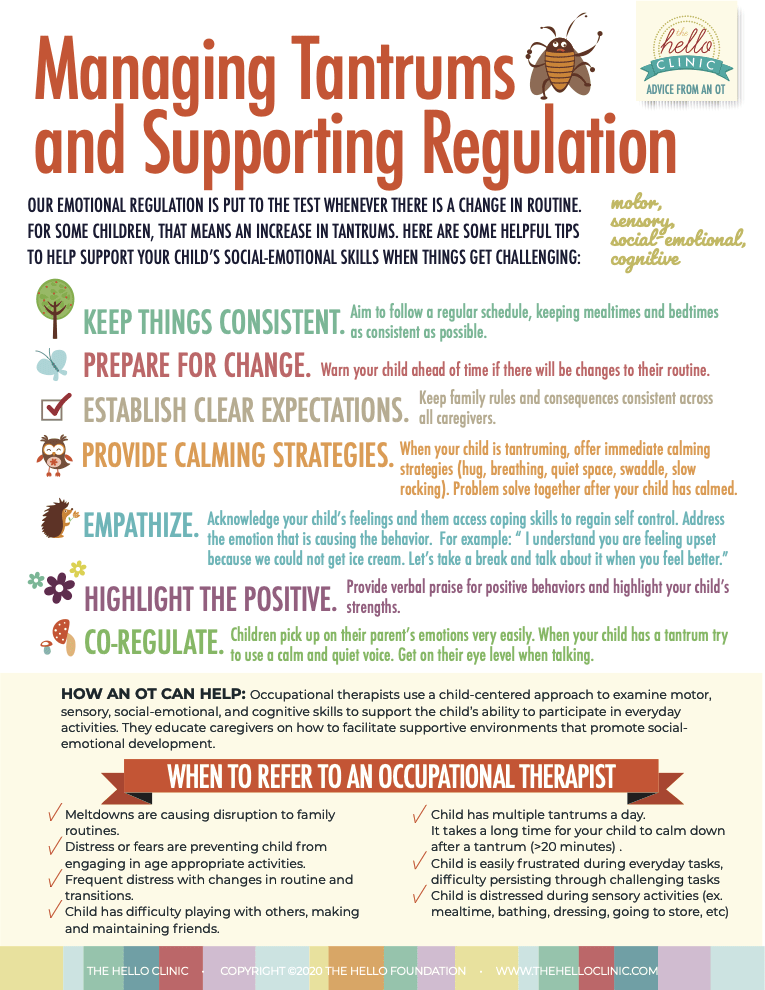
    • Teaching calming and behavioral regulation strategies, and practicing with the students (ex: deep breathing techniques)
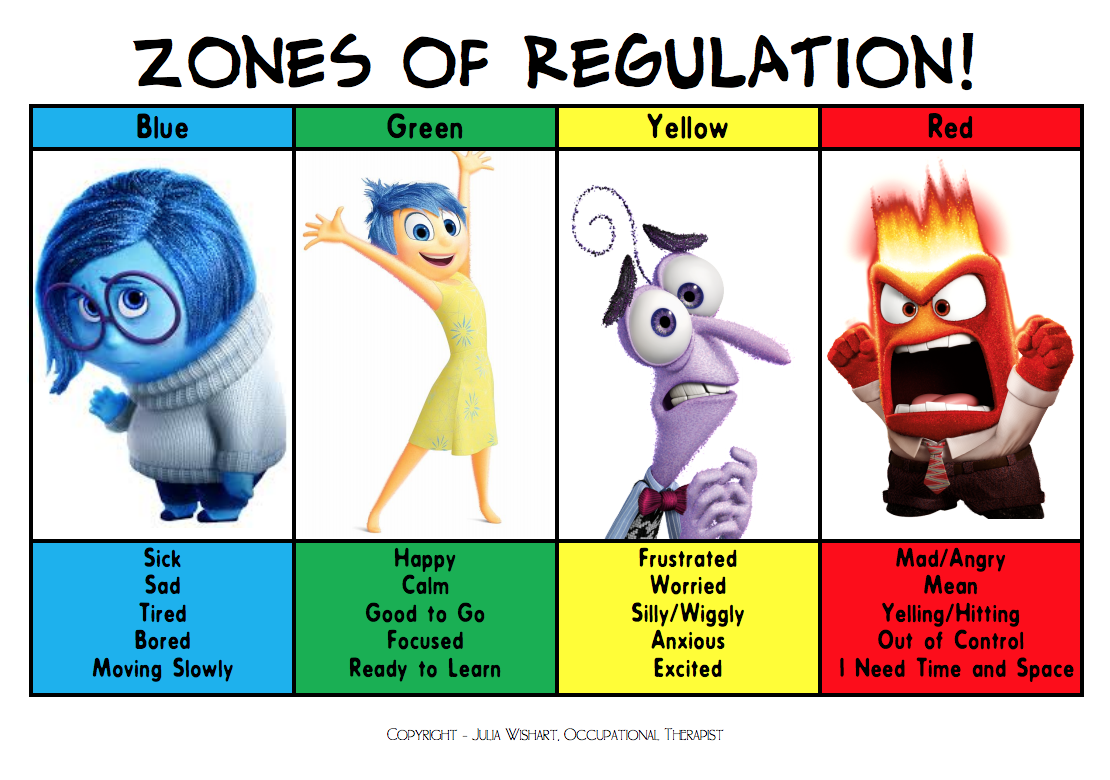
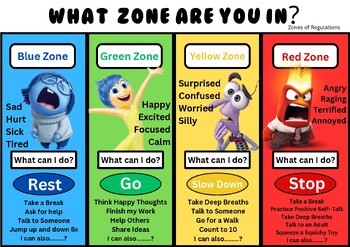
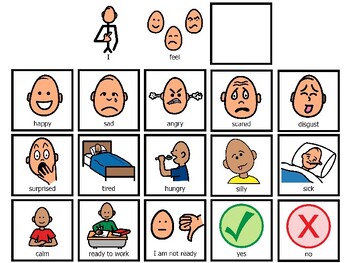
    • Use of visual aids focusing on emotional identification or regulation strategies
    • Embedding emotional literacy moments in class (ex: reading or playing educational videos that teach about emotional regulation)
    • Teachers/staff validating students’ emotions (not just the way they act in response to their emotions)

Social Stories

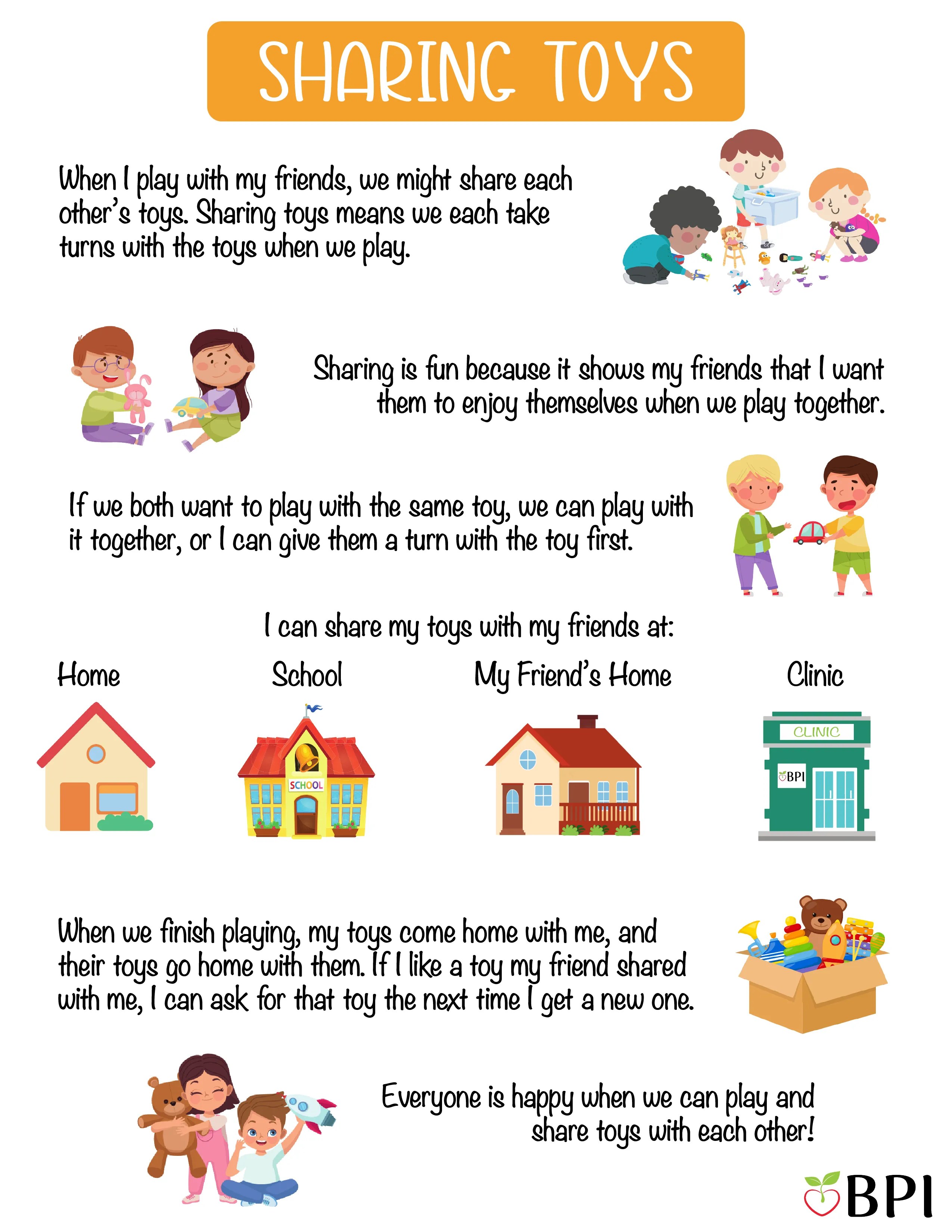
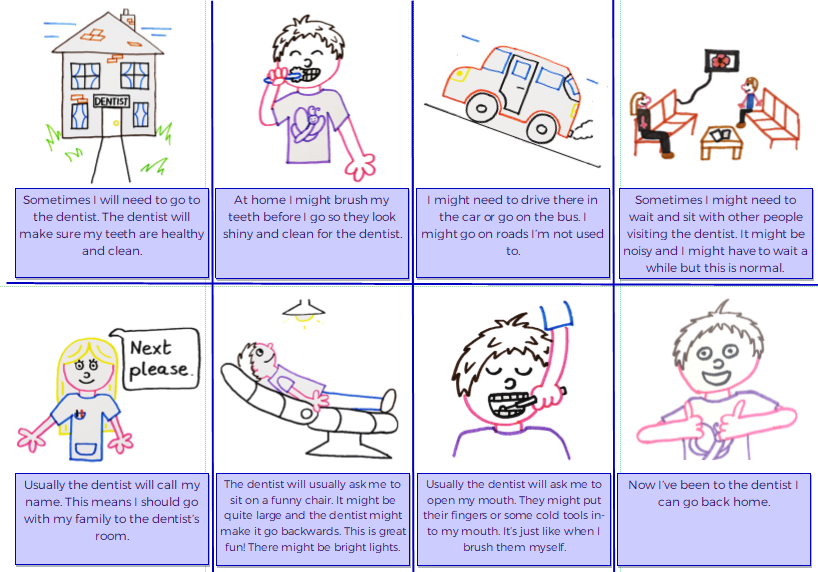
  • Social stories are short, personalized stories that teach individuals how to understand social situations/expectations.
    • Where to find social stories:
      • Make your own! (can make more personable to the students/situation)
      • YouTube (already has a narrator and visuals)
      • Online Websites (several free libraries)
Examples of social story topics:
  • Taking turns / sharing
  • Hygiene
  • How to manage “big emotions” (ex: anger or saddness)
  • Transitioning between class activities
  • How to prepare / what to expect for a specific event (ex: group assembly)
How to make a social story:
  • How to make a social story:
    • Ways to show a social story:
      • Making your own (can use a specific student or the class as the main character(s) to make it more meaningful)
      • Via Youtube
      • Free online databases (see the Light Reads tab for examples)
    • Briefly describe the setting (who-what-where-when-why)
  • Tips for making an effective/meaningful story
    • If making your own social story, you could use a picture of the student engaging in the social situation or real photos of the social situation’s environment.
    • Use “I” statements / first-person perspective and focus on what they CAN do
    • Keep a “positive” tone throughout
    • Promote self-advocacy

Developmentally-Appropriate Books

  • Books play a meaningful role in teaching life skills to children!
    • Consider embedding developmentally appropriate books AND student-preferred books (e.g., Bluey, Minecraft, etc.) in your classroom’s library
Examples of developmentally-appropriate books:
  • Rainbow Fish (sharing, humility, friendship)
  • Chrysanthemum (anxiety, self-esteem)
  • A Sick Day for Amos McGee (friendship, kindness)
  • Grumpy Monkey (sharing/empathic listening, emotional literacy)
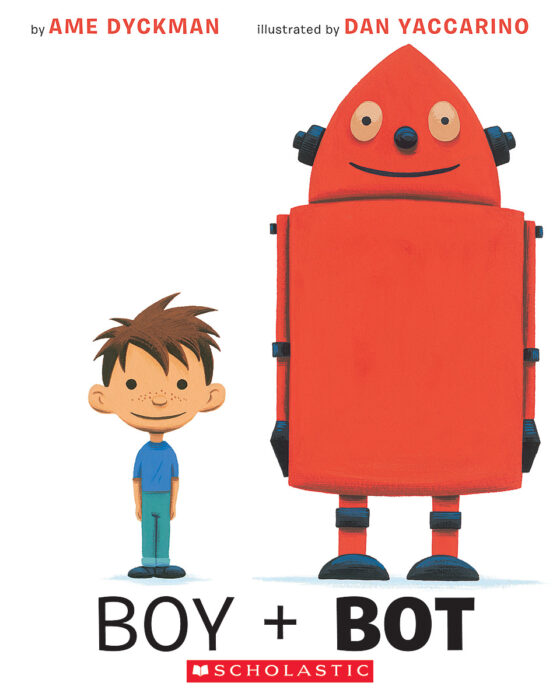
  • Boy + Bot (friendship, accepting differences)
  • Little Blue and Little Yellow (friendship, identity)
  • Red: A Crayon’s Story (identity, celebrating differences)
  • The Day the Crayons Quit (empathy, communication)
  • Leonardo the Terrible Monster (self-esteem, friendship)

Physical Activity as an Intervention

Benefits of Physical Activity on Social-Emotional Regulation:
  • Hormonal Regulation
  • Stress Relief
  • Alleviate Negative Emotions (such as anxiety, depression, impulsivity, aggression, low self-esteem)
  • Self-Regulation
  • Teamwork (working with your peers)
  • Peer Relationships (including empathy, social awareness, communication skills)
Ways to embed physical activity in the classroom:
  • Yoga / Stretch Breaks
  • Dance / Movement Breaks
  • Charades
    • Animal (sound and/or gestures of a specific animal)
    • Emotions (ex: what does sadness look like? anger?)
  • Mirroring Exercises
    • Ex: One student moves their body a certain way, and the other students mirror)
  • Themed Scavenger Hunt
    • Examples:
      • Finding different coping skills around the room
      • Finding positive self-regulation strategies (can also hide negative strategies to make it more of a challenge)

Noise/Volume Control

  • What this looks like:
    • Self-Regulation:
      • Controlling their own volume
      • Being able to show restraint
      • Emotional control in situations
    • Reading Social Cues: I.e., showing Empathy
      • The ability to pick up on social cues (verbal / non-verbal)
      • Communication skills
  • Setting “Soundries
    • Setting personal boundaries with sound
    • What this looks like:
      • Communicating needs and setting the appropriate steps to regulate auditory stimuli
Strategies for managing noise/volume within the classroom to meet different needs
  • Sensory Diet / Sensory Regulation:
    • Using before/after an overstimulating activity to calm the nervous system
    • (see Behavioral Regulation for more details)
  • Practicing scripted self-boundaries:
    • Examples:
      • “I am trying to focus, but it’s too loud.”
      • “Can we please speak softer?”
      • “I feel overwhelmed by how loud it is.”
      • “When you (shout), I feel (overwhelmed). I need (to be spoken to more quietly).”
  • Praising students who demonstrate appropriate noise levels (focusing on the positives!)
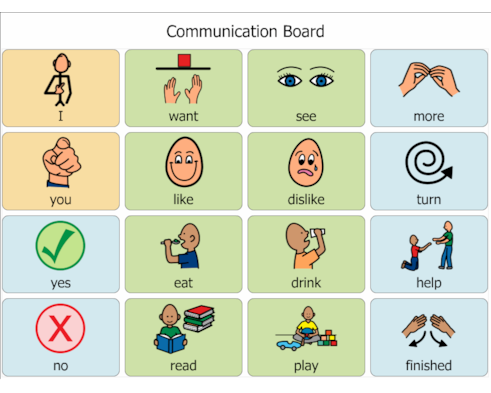
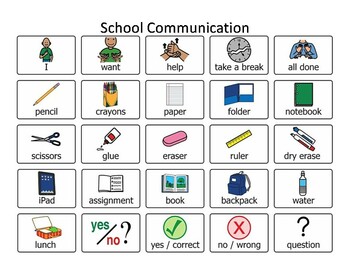
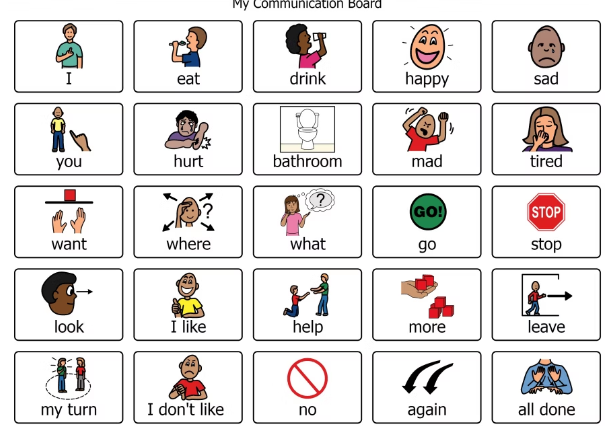
  • Augmentative and Alternative Communication (AAC) Boards:
    • For students who are non-verbal, or shut down when overstimulated
    • Can make your own for free to be more personable!
    • (See Gallery below for examples)

Gallery